


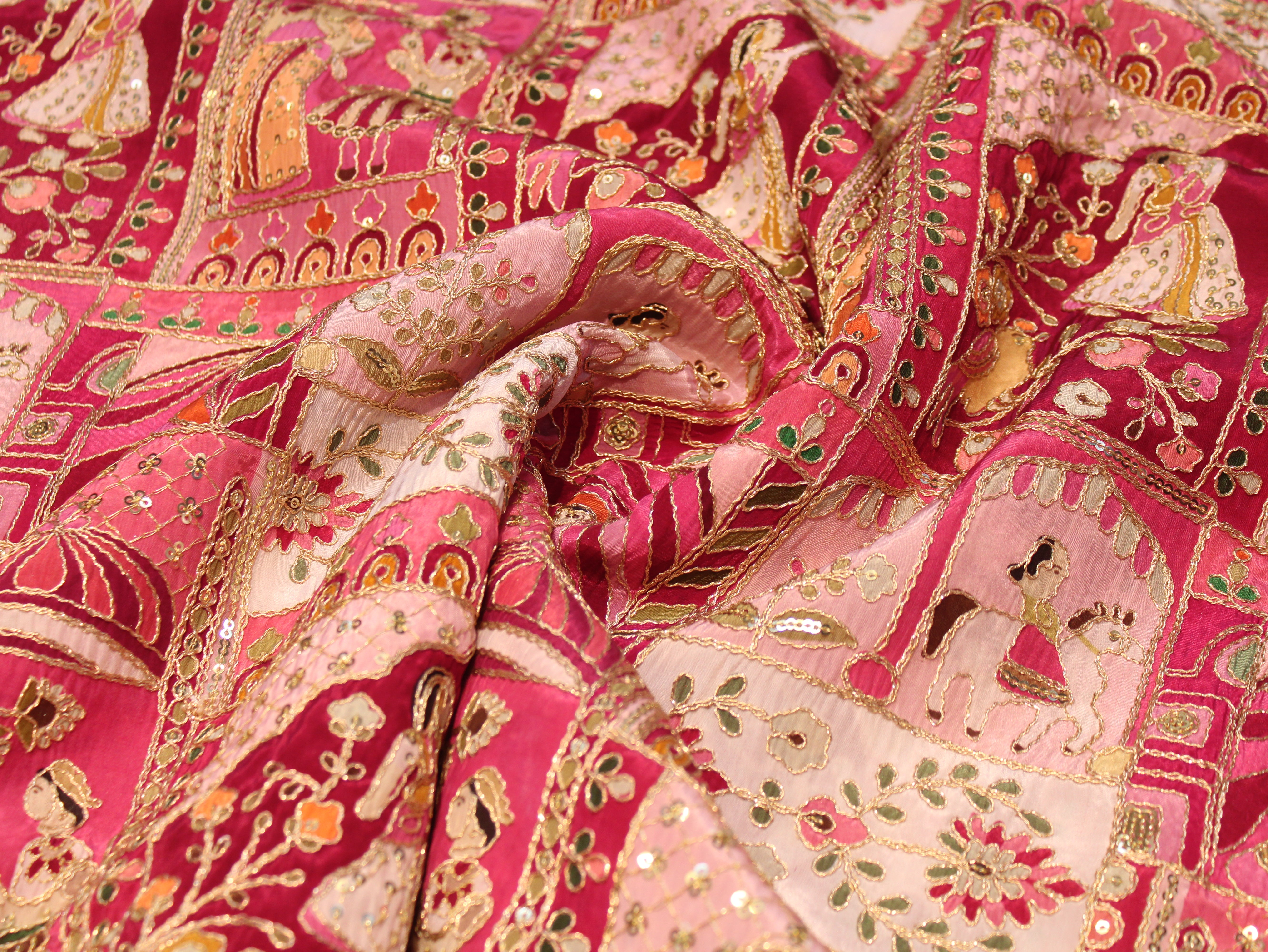
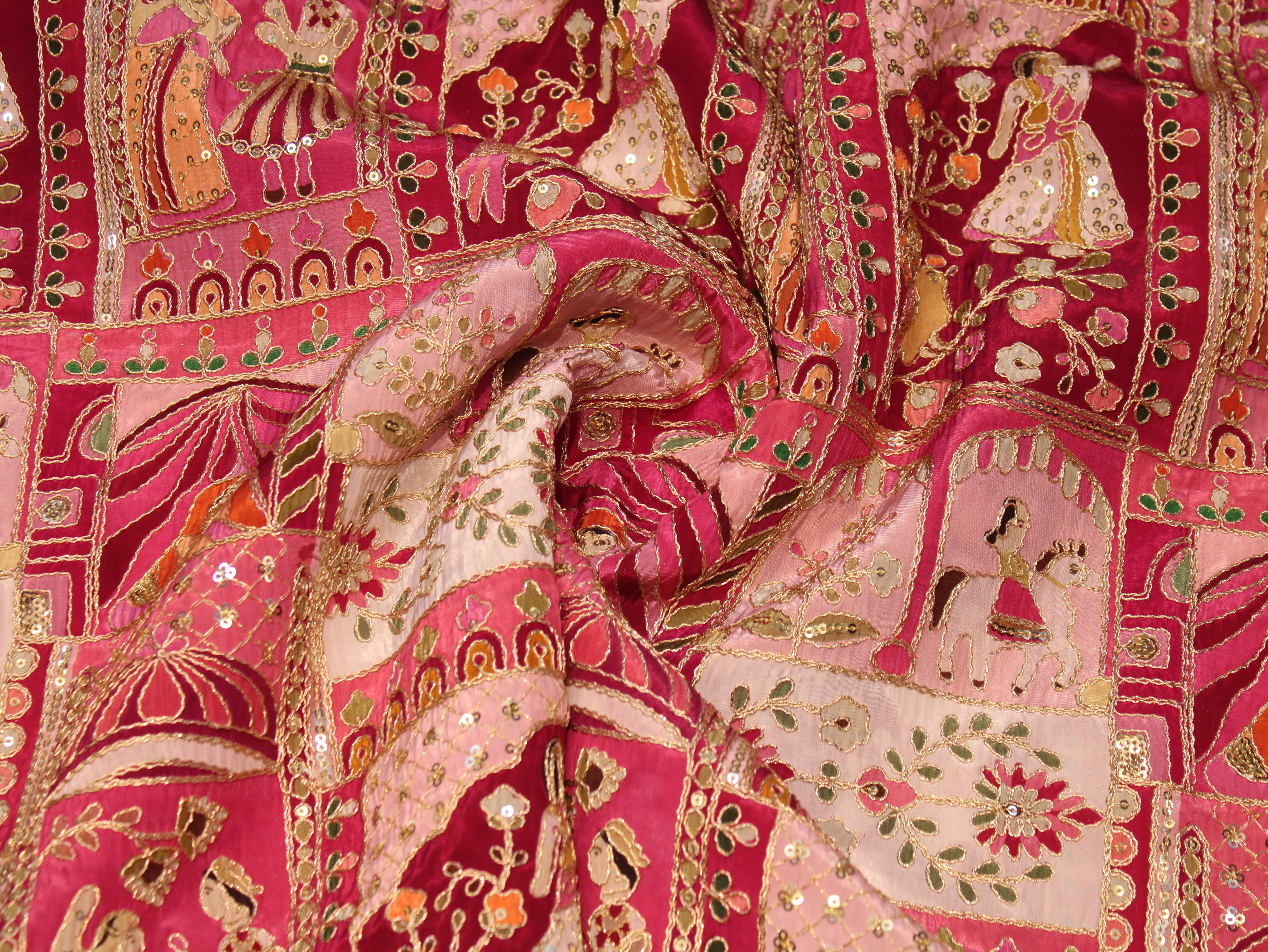
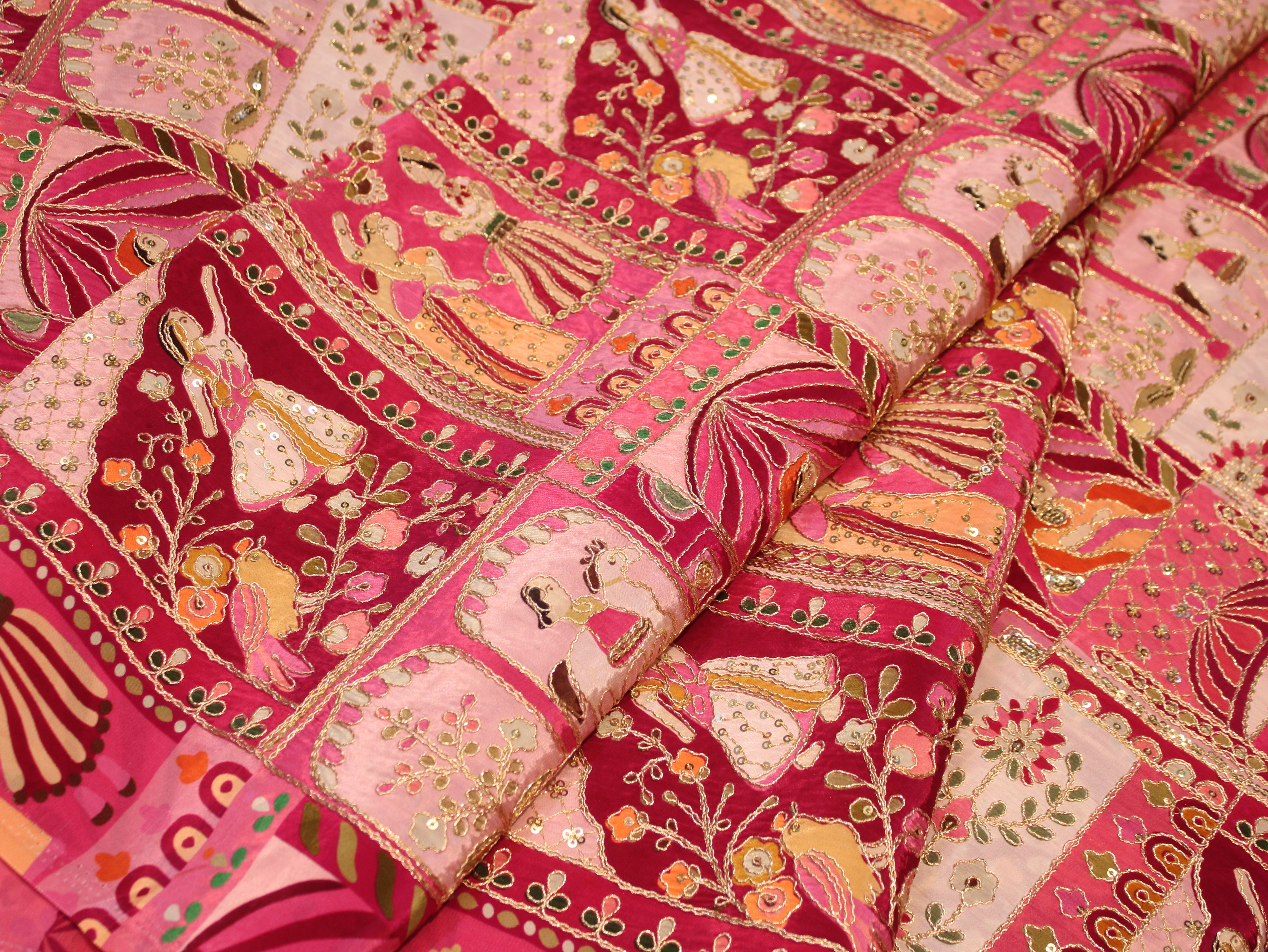
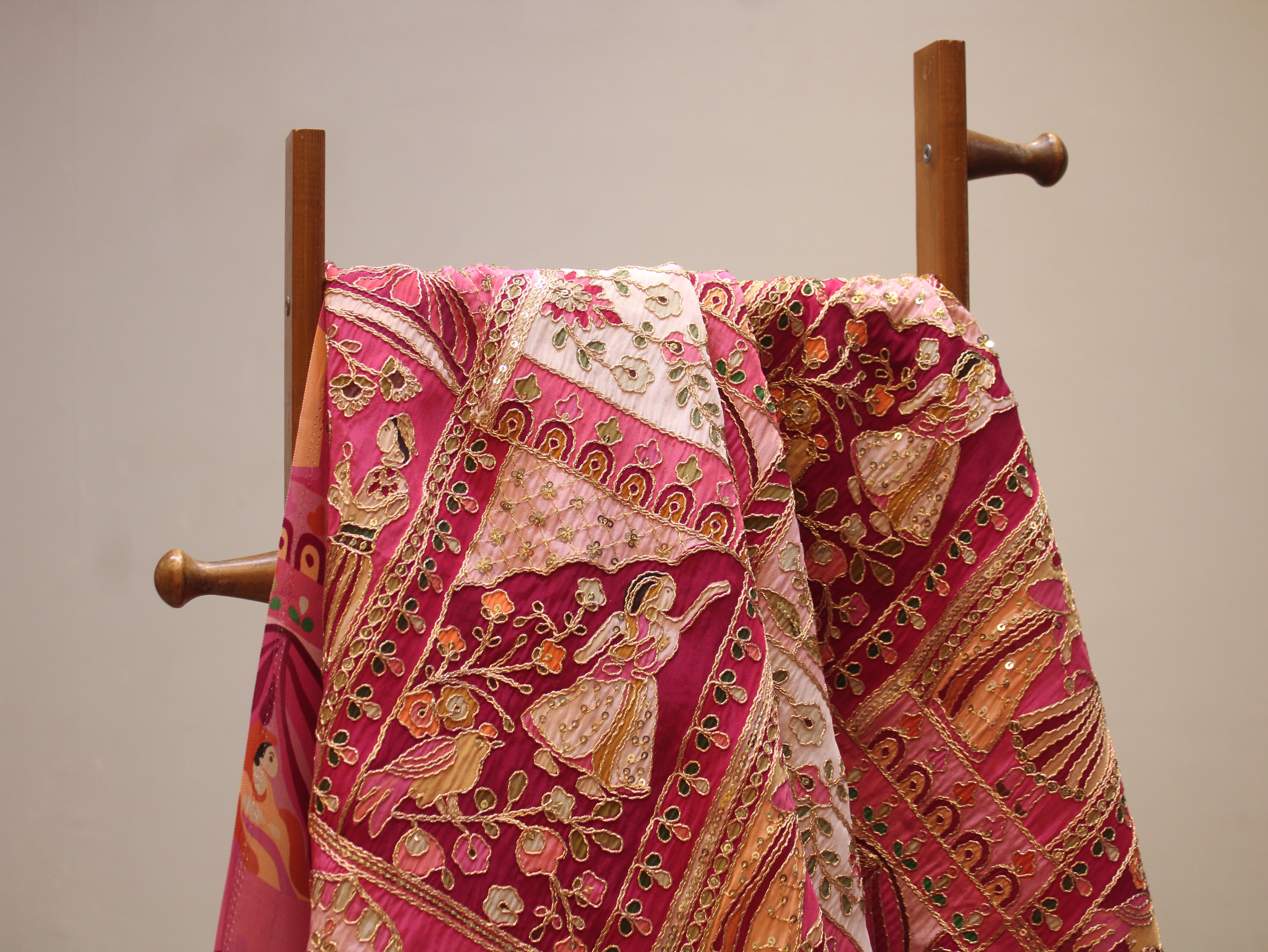
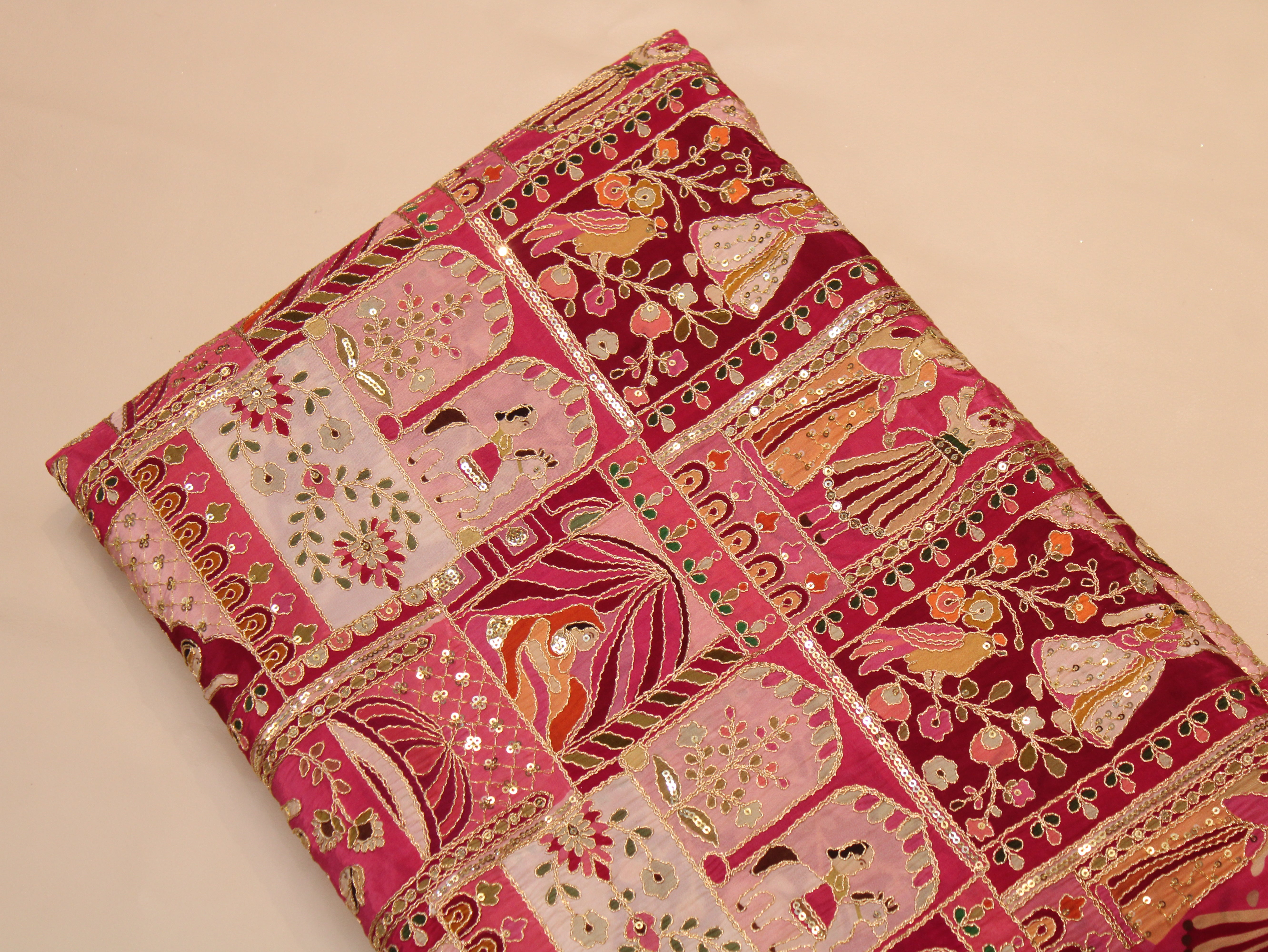
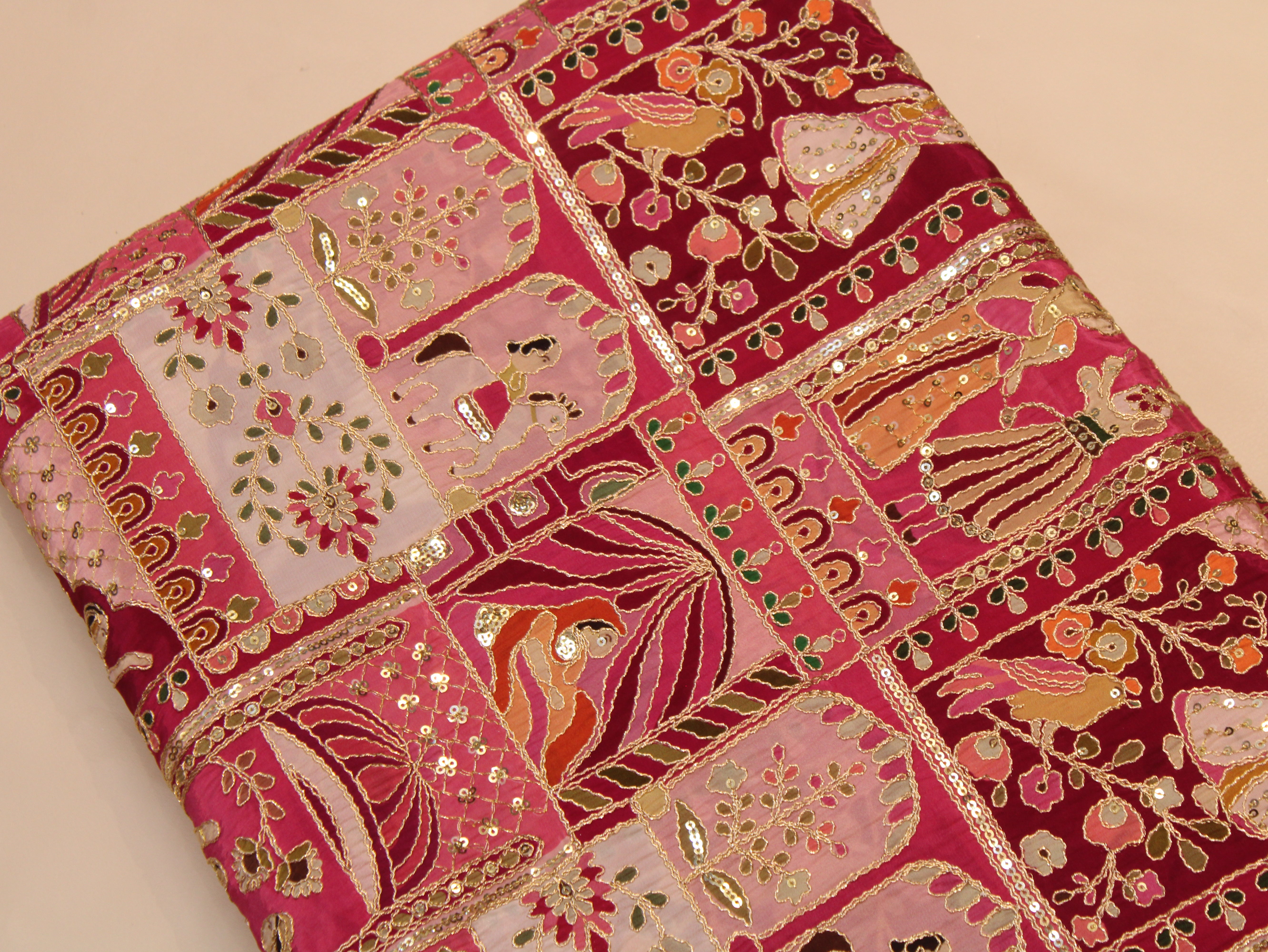
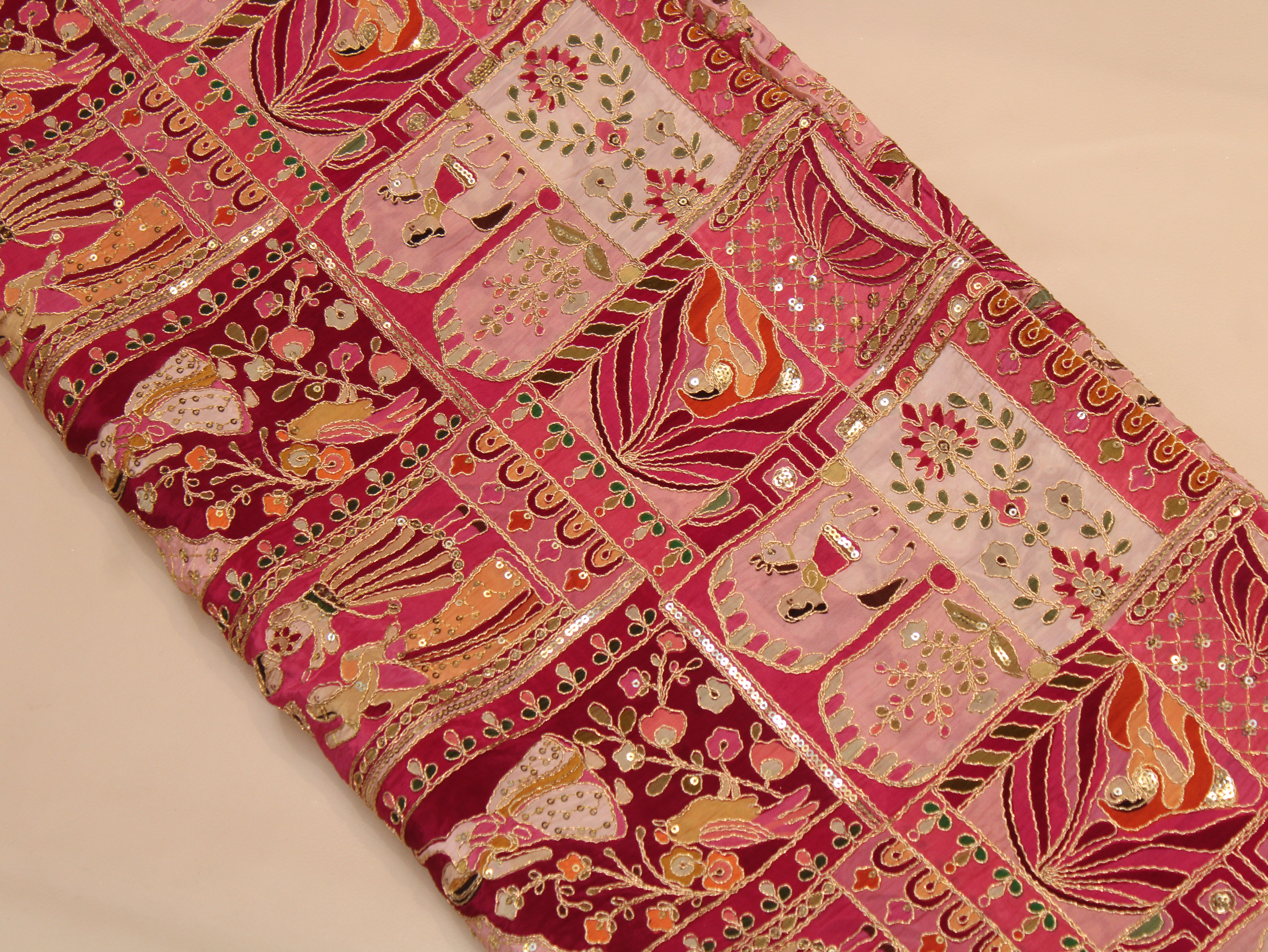
Natural Crepe Position Cording Work Fabric | Peach
About This Fabric
This fabric is currently one of the top choices for family coordination dressing — the same fabric cuts into a men's indo-western or kurta, women's lehenga or dress, and children's outfits simultaneously. The natural crepe base and neutral-toned cording work make it gender and age neutral, while the position design creates visual impact without requiring separate embroidery. Order 8–12 metres for a full family of 4 from a single fabric.
M'Foks Natural Crepe Position Cording Work is a poly viscose yarn fabric woven with a natural crepe base and finished with cording work placed as a position design. Crepe weave introduces a subtly textured, slightly pebbled surface to the fabric — not as flat as satin, not as stiff as canvas — giving the base a natural, organic hand that catches light softly and drapes with a gentle weight. The poly viscose yarn blend brings together the drape and softness of viscose with the structural resilience of polyester, resulting in a fabric that holds its shape through an event, falls gracefully when worn, and recovers well after washing.
The cording work is executed as a position design — raised cord lines or cord motifs are placed in specific zones on the fabric width (spanning 38 of the total 44 inches), creating a textured surface embellishment that is woven or attached into the base. The cording adds three-dimensional interest and a sense of craftsmanship that reads as premium in appearance without the weight and cost of heavy embroidery. The overall effect is a fabric that looks considered and well-finished from the cut, before a single stitch is made by the tailor.
At approximately 130 grams per metre, this is a mid-weight fabric with enough body for structured kurtas, lehenga panels, jacket bodies, and Indo-western silhouettes, while remaining light enough for layered dress construction and warm-weather festive wear. Available in ₹1,500 per metre — this positions it as a premium everyday festive fabric within reach for family occasion dressing.
Perfect For Family Co-ord Sets
What You Get
- Poly viscose yarn — combines viscose drape with polyester resilience
- Natural crepe base — subtly textured, pebbled surface with soft organic hand
- Position cording work — raised cord design in 38-inch work zone, pre-finished look
- Mid-weight at ~130 GSM — structured enough for jackets and lehengas, light enough for dresses
- 44-inch total width — 38-inch cording work width
- Pre-dyed base with cording finish — colour and work both ready to stitch
- Currently trending for family coordinated occasion dressing
- Gender and age neutral — same fabric works for men, women, and children
- Low maintenance — poly viscose blend, machine washable
- Made in India
Technical Specifications
| Fabric Name | Natural Crepe Position Cording Work Fabric |
| Yarn Composition | Poly Viscose Yarn (Polyester + Viscose blend) |
| Base Weave | Natural Crepe — subtly textured, pebbled surface |
| Surface Work | Cording — raised cord lines / motif in position design |
| Total Fabric Width | 44 inches / 112 cm |
| Cording Work Width | 38 inches / 97 cm (position work zone) |
| Fabric Weight | Approx. 130 GSM |
| Texture | Soft crepe surface — natural, organic hand feel |
| Drape | Structured yet fluid — holds silhouette, flows in motion |
| 🔥 Trending Use | Family coordinated occasion wear — men, women & children |
| Shrinkage | Low — poly viscose blend, minimal shrinkage |
| Suitable For | Men's and women's ethnic, indo-western & designer garments |
| Country of Origin | India |
| HSN Code | 55151130 |
| GST Rate | 5% |
Common Questions
What garments is this fabric best suited for?
Menswear: indo-western jacket, bandhgala coat, kurta, Nehru collar jacket, sherwani lining. Womenswear: lehenga skirt, kurta, blouse, anarkali, A-line dress, designer maxi dress. Children's wear: kurta, frock, coordinated outfit. The position cording work provides built-in visual interest — the tailor just needs to cut, stitch, and the garment looks finished.
Why is this fabric trending for family coordinated outfits?
Family coordination dressing (matching or tonal outfits for the entire family for weddings, Diwali, Eid, and photo sessions) has grown significantly in the last 2–3 years. This fabric works for it because the natural crepe base, neutral cording, and mid-weight construction are all gender and age neutral — the same fabric roll cuts into a men's indo-western jacket, a women's lehenga, and a child's outfit with no compromise. Buying by the metre keeps the entire family's outfits from a single fabric, guaranteeing perfect colour and texture match.
What is "cording work" and how is it different from embroidery?
Cording work involves attaching or weaving a thick thread or cord along the surface of the fabric in a defined pattern — typically lines, geometric shapes, or simple motifs. Unlike embroidery which uses needle and thread to create pictorial designs, cording creates a clean, linear, raised texture. It looks structured and modern rather than ornate. The cording here is placed as a position design — concentrated in the 38-inch zone — which means specific garment panels carry the cording naturally without needing separate embellishment.
How many metres do I need for a full family co-ord set?
Men's indo-western / jacket + kurta: 3.5–4 metres. Women's lehenga + blouse: 4–5 metres. Women's dress: 3–3.5 metres. Child's outfit (age 5–10): 1.5–2 metres. Full family of 4 (men + women + 2 children): 10–12 metres. For a couple (men + women only): 7–8 metres. Add 10% for cording position layout adjustment and seam allowance.
Does the cording work affect how the fabric is stitched?
Yes — at the cording lines specifically. Stitch around cord-raised areas rather than through the thick cord itself. When pressing seams over cord areas, use a thick pressing cloth or a seam roller to avoid flattening the raised cord design. The plain crepe areas of the fabric stitch normally with a standard universal needle (80/12 or 90/14).
Does this fabric need a lining?
For structured garments like jackets, indo-western coats, and lehenga skirts — a lightweight lining (china silk, polyester lining, or cotton voile) is recommended to add structure and a clean interior finish. For kurtas and dresses where a softer fall is preferred, lining is optional. The 130 GSM weight means the fabric is not sheer — opacity is not a concern.
Cutting Tips & Care
Cutting & Stitching Tips
-
1Plan layout for full family before cutting
If cutting for multiple family members from a single roll, lay out all pattern pieces on the fabric before making any cuts. Verify that the 38-inch cording work falls on the correct visible panels for each garment — jacket fronts, lehenga panels, kurta yoke. Mark cutting lines before scissoring.
-
2Handle crepe fabric carefully while cutting
Crepe fabric has some natural stretch and can shift while cutting. Pin to a cutting mat or use pattern weights. Cut on a single layer for precision, especially for fitted jacket bodies and lehenga waistbands.
-
3Stitching around cording areas
Avoid stitching directly through the thick cording lines — route seam lines around cording where possible. For seams that must cross cording, use a zipper foot or cording foot for cleaner results. At seam intersections with cord, backstitch carefully to prevent the cord from pulling at stress points.
-
4Needle and thread
Use a universal needle (80/12 or 90/14) for plain crepe areas. Switch to a jeans/heavy needle (90/14 or 100/16) when stitching through layered cording areas. Match thread colour to the dominant fabric tone.
-
5Finish raw edges
Poly viscose frays at cut edges. Serge or overlock all raw edges immediately after cutting. For a professional interior finish on jackets and indo-western garments, French seams or bound seams are recommended.
Care Instructions
-
•Washing
Hand wash cold with mild detergent, or machine wash on gentle cycle in a mesh laundry bag. Cold water preserves the cording work integrity over repeated washes. Dry clean recommended for stitched garments with heavy cording detail.
-
•Drying
Hang or lay flat in shade. Do not wring or twist — the cording can shift or deform when fabric is wrung wet. Smooth gently while damp and hang to dry in shape.
-
•Ironing
Iron on the reverse side on medium heat with a thick pressing cloth. Do not press directly on the cording surface — direct iron heat can flatten or distort the raised cord design permanently. Use a seam roller on cord areas instead of direct ironing.
-
•Storage
Fold loosely along the grain with the cording face outward to prevent flattening under pressure. Use a breathable garment bag for finished stitched garments. Store away from direct sunlight and moisture.
⚠ Never press directly on the cording surface — use reverse-side ironing with a thick pressing cloth. The cording work width is 38 inches within the 44-inch total fabric width — plan all cutting layouts within the 38-inch zone for visible garment panels. For full family co-ord sets, lay out all pieces before making any cuts.
Packed & Marked By:
Mangaldeep & Concept
Address: 3, Kankariya Complex, beawar - Rajasthan 305901
India
Customer Support:
WhatsApp: +91 7597878011
Email: info@mfoks.com
Choose options