
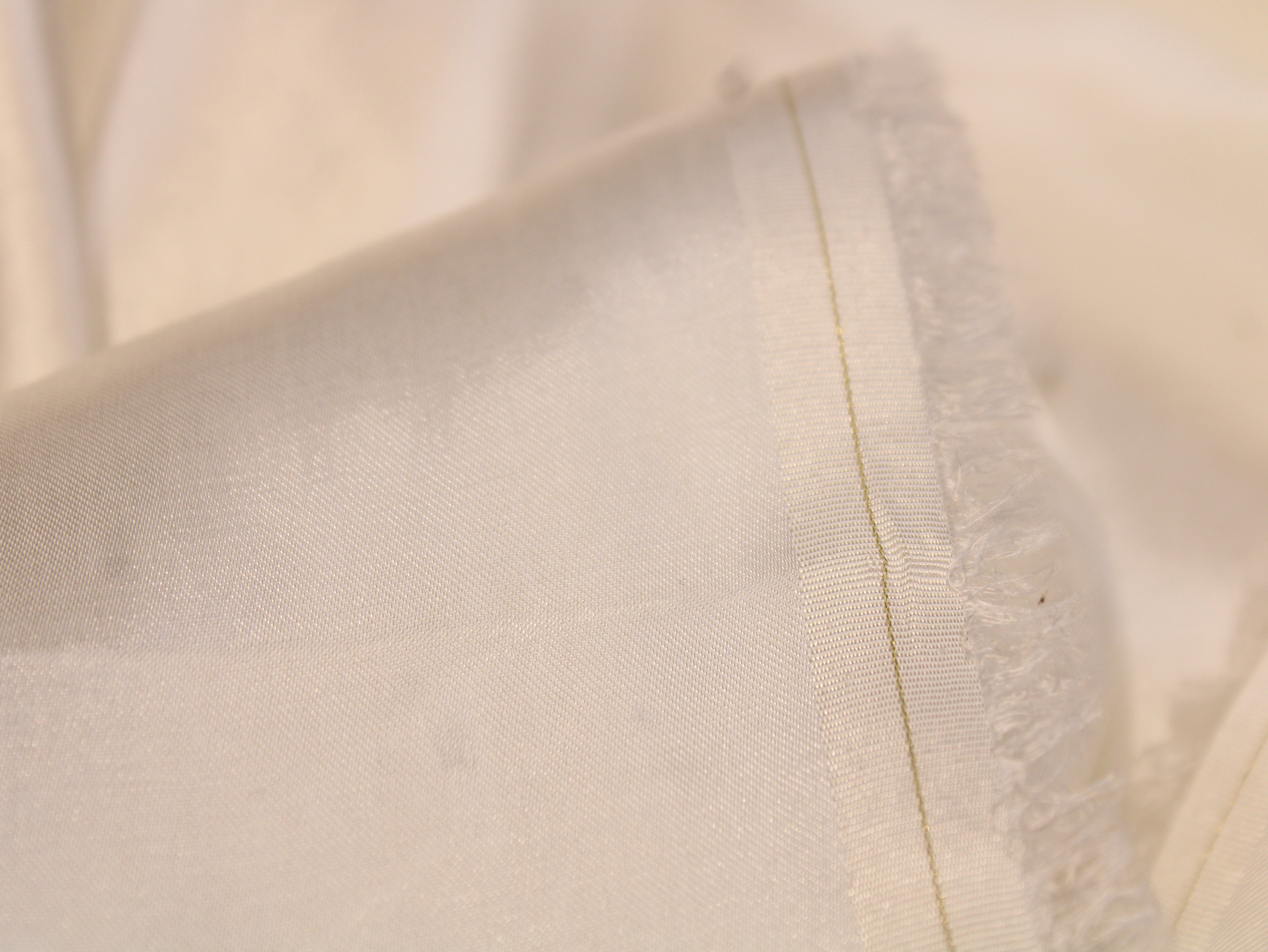
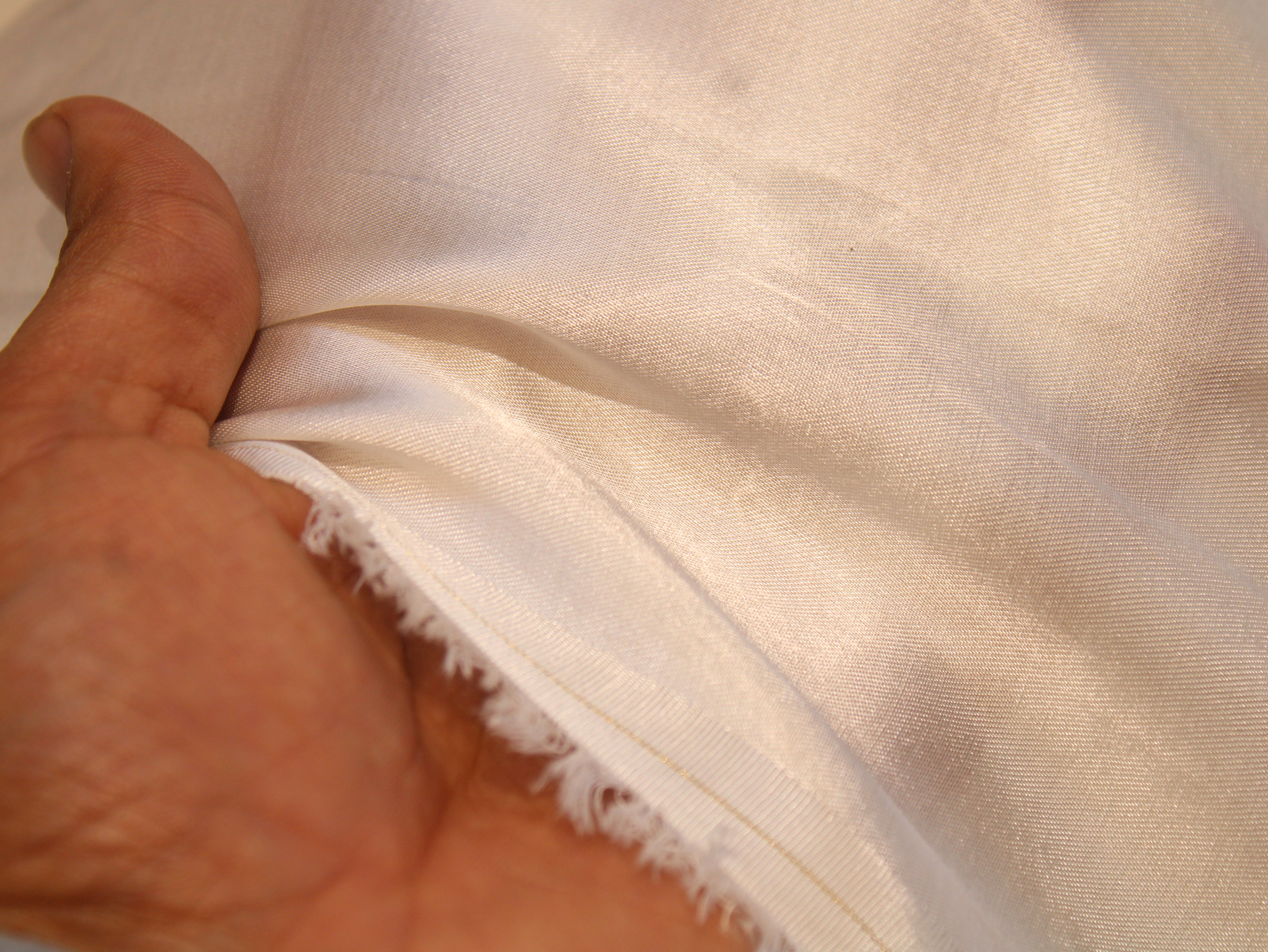


Viscose Gaji Silk Fabric Plain Dyeable | 44 Inch | 90 GSM | M'Foks
About This Fabric
M'Foks Viscose Gaji Silk is a plain-weave viscose filament fabric with a naturally fluid drape and a soft, silk-like surface. Sold in its undyed state, it accepts direct, acid, and fiber reactive dyes evenly across the full 44-inch width — giving you clean, consistent colour results without patchiness or streaking.
Gaji weave uses a tight plain construction that holds its shape through wear and repeated washing. At approximately 90 grams per metre, the weight sits in a sweet spot — light enough for a layered saree or flowing dupatta, structured enough to hold a sharp kurta or sherwani silhouette. The fabric is gender-neutral in use: it cuts and stitches cleanly for both menswear (sherwani, kurta, nehru jacket) and womenswear (saree, lehenga dupatta, anarkali, designer dress).
Allow for approximately 5% shrinkage after dyeing. Pre-wash in lukewarm water before dyeing or cutting to let the fabric settle to its natural dimensions and remove factory finish.
What You Get
- 100% Viscose (Gaji Silk weave) — pure, no blends
- Plain weave construction — clean surface, uniform texture
- Soft, silk-like texture — smooth and skin-friendly
- Lightweight at ~90 GSM — fluid drape, suitable for layered garments
- 44-inch (112 cm) width — wide cut for ethnic garment layouts
- 100% dyeable — accepts direct, acid, and fiber reactive dyes
- Gender-neutral — suitable for both menswear and womenswear
- ~5% shrinkage after dyeing — cut with margin
- Pre-wash recommended before dyeing or stitching
- Made in India
Technical Specifications
| Fabric Name | Viscose Gaji Silk Plain Dyeable |
| Composition | 100% Viscose (Rayon Filament) |
| Weave Type | Gaji — plain weave |
| Fabric Width | 44 inches / 112 cm |
| Fabric Weight | Approx. 90 GSM |
| Texture | Lightweight, soft, silk-like |
| Colour (as sold) | Off-White / Undyed |
| Dyeability | 100% Dyeable |
| Compatible Dyes | Direct dyes · Acid dyes · Fiber reactive dyes |
| Shrinkage After Dyeing | Approx. 5% |
| Suitable For | Men & Women — ethnic and designer garments |
| Country of Origin | India |
| HSN Code | 54082290 |
| GST Rate | 5% |
Common Questions
What garments is this fabric best suited for?
Sarees, dupattas, kurtis, anarkalis, lehenga dupattas, sherwani lining or outer fabric, Nehru jackets, and designer dresses. The fluid drape and soft texture work equally well for ethnic Indian formalwear for both men and women.
Can men use this fabric for sherwani or kurta?
Yes. Gaji silk is a traditional choice for sherwani fabric. The plain weave holds structure for a clean, formal silhouette. Dye to your required shade before stitching. Also suitable for Nehru jackets, indo-western coats, and kurta-pajama sets.
How many metres do I need?
Saree: 5.5–6 metres. Dupatta: 2.5 metres. Kurta (women's): 2.5–3 metres. Sherwani (men's, full): 3.5–4 metres. Kurta (men's, standard): 2.5–3 metres. Add 5–10% extra for post-dyeing shrinkage.
Is the drape suitable for a saree?
Yes. At 90 GSM, Gaji silk drapes fluidly with good pallu flow. It behaves similarly to pure silk georgette but at a more accessible price point. Dye, pleat, and drape as you would any filament saree fabric.
Can I embroider or print on this fabric?
Yes. The smooth, uniform surface is well-suited for machine embroidery, hand embroidery, block printing, and screen printing. Work on the fabric after dyeing for best results.
Is it comfortable in Indian summer weather?
Yes. Viscose is breathable and moisture-absorbent — more so than polyester or nylon alternatives. The lightweight 90 GSM construction allows air circulation, making it suitable for warm-weather festive and formal wear.
Dyeing & Care
Dyeing Steps
-
1Pre-wash
Hand wash in lukewarm water before dyeing. Dry flat. Removes factory finish and ensures even dye absorption across the full width.
-
2Choose your dye
Use direct dyes, acid dyes, or fiber reactive dyes (e.g. Dylon, Rit All-Purpose, Tulip, Remazol). Do not use disperse dyes — these are for synthetic polyester fabrics and will not bond with viscose.
-
3Dye bath
Dissolve dye fully in warm water (40–60°C for direct/reactive dyes). Submerge the fabric completely. Stir gently and continuously for even, consistent colour uptake. Avoid high heat — viscose weakens above 60°C when wet.
-
4Cut allowance for shrinkage
Expect approximately 5% shrinkage. Cut all pieces slightly larger than your final measurements before dyeing.
-
5Rinse & dry
Rinse in cool water until clear. Do not wring or twist — press gently. Lay flat in shade to dry. Do not tumble dry.
Care After Dyeing
-
•Washing
Hand wash cold with mild detergent. Do not machine wash — viscose loses strength when wet and can distort under machine agitation.
-
•Drying
Lay flat in shade. Do not wring, twist, or tumble dry. Reshape gently while damp.
-
•Ironing
Iron on medium heat (synthetic/rayon setting) while slightly damp. Use a pressing cloth to avoid shine. Do not use high heat.
-
•Storage
Fold loosely and store away from direct sunlight and moisture to preserve colour and fabric integrity.
⚠ Do not use disperse dyes — they are designed for polyester and will not bond with viscose. Use direct, acid, or fiber reactive dyes only. Avoid water temperatures above 60°C when wet to prevent fabric distortion.
Packed & Marked By:
Mangaldeep & Concept
Address: 3, Kankariya Complex, beawar - Rajasthan 305901
India
Customer Support:
WhatsApp: +91 7597878011
Email: info@mfoks.com
Choose options